
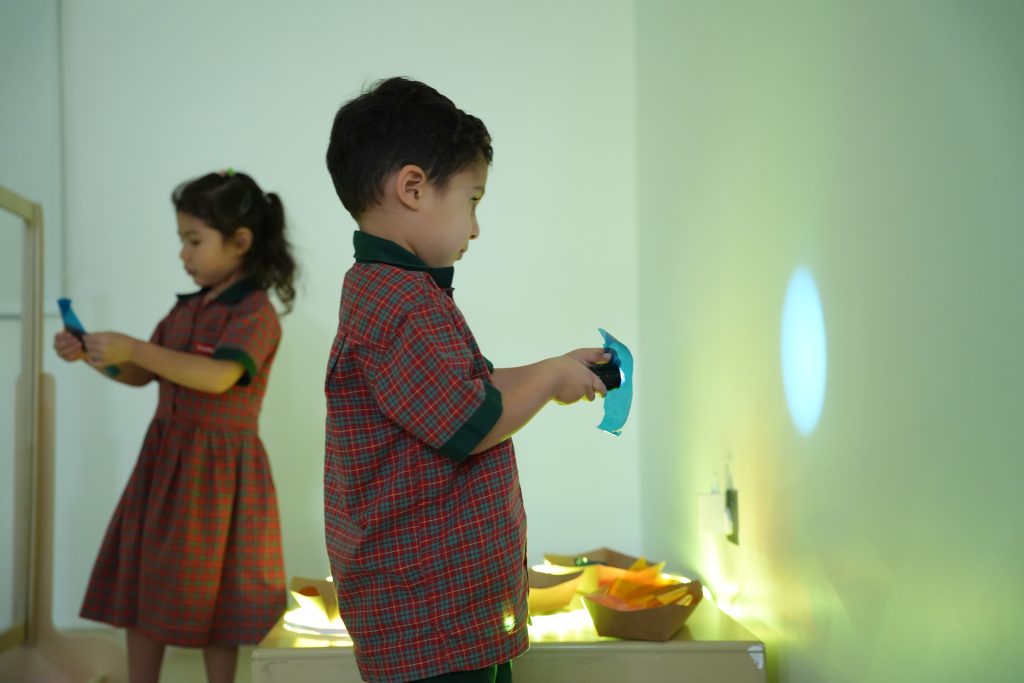
It’s rare to find a child without a lot of questions in their mind. Asking ‘why?’ is their way of exploring the world around them and fueling their curiosity. By supporting their curiosity with inquiry-based learning, we nurture children’s drive to ask0 questions and explore, laying the foundation for critical thinking and the ability to think independently.
Below, we explore why raising critical thinkers is so important for parents, how the Reggio Emilia inquiry-based approach works, and ways parents can encourage curiosity and critical thinking at home.
Why Raising Critical Thinkers Matters for Parents
For parents, nurturing these skills early means equipping children to navigate complexity with confidence as they grow. In today’s rapidly changing world, simply memorising facts is not enough. Children need to make sense of information, analyse it, and draw their own conclusions. Critical thinking is an essential life skill that helps even young children make good decisions and understand the consequences of their actions.
For parents, nurturing these skills early means equipping children to navigate life’s challenges with confidence as they grow. In today’s rapidly changing world, simply memorising facts is not enough; children should be capable of:
Making Smarter Choices
Children who think critically weigh options, question assumptions, and make sound decisions. This gives parents confidence that their little ones can handle challenges responsibly.
Filtering Truth from Misinformation
We live in an age of information overload, where children are constantly exposed to social media, advertising, and conflicting viewpoints. Critical thinking helps them filter truth from misinformation, giving parents peace of mind that their children won’t be easily misled.
Solving Problems
Critical thinkers approach problems with curiosity and creativity. Instead of panicking or giving up, they analyse situations, consider different solutions, and adapt when something doesn’t work. This mindset benefits in different aspects, from schoolwork to real-world challenges.
Communicating with Confidence and Respect
When children think critically, they learn to express opinions clearly, listen to others, and respect different perspectives. Parents raising such children often notice fewer conflicts at home and more constructive conversations.
What Inquiry-Based Learning Means in the Reggio Approach
Inquiry-based learning is at the heart of the Reggio Emilia approach to early childhood education. In a Reggio-inspired classroom, children drive the learning journey through their own curiosity and questions.
Instead of following a rigid, pre-set curriculum, educators bserve what the children are interested in and support them in exploring those interests. Learning often unfolds through child-led projects, which involve in-depth explorations of topics that children find fascinating.
The Reggio approach also emphasises the learning environment and multiple learning styles. The classroom is considered the “third teacher,” deliberately filled with open-ended materials (like blocks, art supplies, natural items) that provoke curiosity and creativity.
How Can Parents Raise a Critical Thinker
Parents play a crucial role in nurturing curiosity and critical thinking beyond the classroom. These skills can be encouraged through everyday routines and small, intentional choices at home.
Below are some practical parenting tips to help spark curiosity and strengthen critical thinking in early childhood:
Embrace the “Why” Phase
The key is to create an environment where questions are welcomed and exploration is encouraged. For instance, when your child asks, “Why do rainbows come after it rains?”, resist the urge to give a simple answer right away. Instead, engage in a dialogue: “That’s an interesting question. What do you think?” This kind of response turns the question back to the child, prompting them to think and unleash a wild stream of ideas.
You can then explore the answer together by experimenting, e.g. using a prism to see how light splits or looking up information in a book.
Model Curiosity Yourself
It’s also important to model curiosity and critical thinking yourself. Children learn a lot by watching adults. Share your own questions and thought process with your children.
For example, if you’re fixing something around the house, you might think aloud, “I wonder why this isn’t working, let’s try to figure it out,” and involve your child in problem-solving. Showing that you also have questions and use strategies to find answers demonstrates that being curious is a positive, lifelong trait.
Create a Safe Space for Exploration
Additionally, parents can foster curiosity by making home a safe space for exploration (yes, that might mean tolerating some mess!). Set aside time for unstructured play where your child can experiment, build, and create.
Provide simple, open-ended materials such as cardboard boxes, art supplies, or everyday household items, and let your child’s imagination take the lead. Often, the messiest play leads to the most meaningful learning as children explore how things work on their own.
Ask Open-Ended Questions During Play
Encourage deeper thinking by posing questions that don’t have a single correct answer. For example, if your child is building with blocks or drawing, you might ask, “What can you tell me about what you made?” or “What do you think would happen if we try it this way?”.
Open-ended questions encourage children to explain their ideas and think critically about what they’re doing.
Support Their Interests
Pay attention to what sparks your child’s curiosity. Whether it’s bugs, cooking, or building things, you can provide resources to delve deeper. If your little one loves insects, you might gather books about bugs or spend an afternoon observing ants. Promoting their passions keeps them engaged and motivated to ask questions and solve problems.
Turn Slip-ups into Learning Opportunities
Help your child see mistakes or failures as learning opportunities rather than something bad. If a tower of blocks collapses or an idea doesn’t work out, talk it through warmly: “Oops, that didn’t go as expected. Why do you think it fell over, and what could we do differently next time?”.
This approach teaches children to analyse outcomes and adapt, which is the essence of critical thinking. By embracing mistakes as part of learning, you build their resilience and problem-solving skills.
Value Their Curiosity
Throughout these activities, be present and listen to their questions. When children see that their curiosity is valued, they feel confident to keep asking questions and seeking answers. In this way, parents act as facilitators of inquiry-based learning, not by providing all the answers, but by guiding children to explore and think for themselves.
Parent–Educator Partnership in Reggio-Inspired Learning at EtonHouse Riyadh
At EtonHouse Riyadh, we believe that education is a journey best travelled together with families. As Riyadh’s first Reggio Emilia-inspired preschool, we provide a nurturing environment where curiosity is celebrated, questions are valued, and every child’s voice is heard.
Our inquiry-led curriculum draws from the trusted EtonHouse approach in Singapore, emphasising hands-on exploration and a child-centred philosophy. What truly makes our learning environment special is the strong parent–educator partnership we foster.
EtonHouse considers parents as co-educators and vital partners in each child’s learning journey. We actively involve families through regular community events, parent workshops, and even in-classroom projects and initiatives, extending learning beyond the school day.
This means that as a parent, you are not left at the school gate; instead, you become part of the learning experience, reinforcing at home the same curiosity and critical thinking skills we nurture in class.
Our teaching team works hand-in-hand with parents to ensure consistency and support for each child. We maintain an open, ongoing communication, sharing observations about your child’s interests and progress, and welcome your insights as well.
By collaborating closely, we create a bridge between home and school. Children see that the adults in their lives are united in encouraging their questions, ideas, and growth.