At EtonHouse Riyadh, we believe that raising global learners begins in the earliest years. Our international school community is dedicated to nurturing young children’s language skills and cognitive development in a warm, inquiry-driven environment.
In this article, we explore why early development matters and how our bilingual, inquiry-based approach provides a strong foundation, helping children grow into confident, empathetic global citizens.
Why Early Language and Cognitive Development Matters
The first five years of life are a critical window for brain development. In fact, about 90% of a child’s brain development happens by age 5, making early childhood experiences essential for shaping their ability to learn, think, and thrive.
Playful exploration and rich language exposure in these formative years help shape not just literacy and numeracy skills, but children’s personality, confidence, and love of learning.
That’s why we guide families to support their child’s language and thinking skills through everyday activities like talking, reading, singing, and imaginative play. These simple, joyful interactions help build strong brain connections that support higher-level skills, such as creativity, reasoning, and problem-solving. Here is why this stage is so critical:
Brain Architecture Builds Early
In the first five years, the brain develops at an astonishing rate. Most of the neural pathways that support learning, behaviour, and emotional regulation are formed during this time. Early stimulation strengthens these pathways, influencing how children absorb and process information for years to come.
A Foundation for Lifelong Learning
Early skills like vocabulary, attention span, and self-regulation form the basis for academic success. Children who develop strong language and cognitive abilities early tend to grasp reading, math and social concepts more easily in later school years.
Bilingualism Builds Mental Agility
Exposure to more than one language in early childhood has cognitive benefits beyond communication. Bilingual children often show greater mental flexibility, better memory, and stronger problem-solving skills. Switching between languages trains the brain to think in more adaptive and efficient ways.
Stronger Social and Emotional Development
Language is a key tool for expressing emotions, understanding others, and navigating relationships. Children who are encouraged to communicate and explore ideas from an early age often grow into more confident, empathetic individuals.
A Bilingual Learning Environment at EtonHouse Riyadh
At EtonHouse, we proudly offer a bilingual programme that immerses our students in both English and Arabic every day.
In our classrooms and play spaces, we encourage children to use both languages naturally through songs, storytelling, games, and conversation, so that language learning feels joyful and authentic. We also offer optional Mandarin classes for those interested in a third language.
As a result, our students grow up comfortable switching between languages and cultures, a key advantage in today’s globalised world.
Key benefits of our bilingual environment include:
- Daily English and Arabic instruction: Our curriculum weaves both languages into each day’s activities. This constant exposure helps young learners pick up grammar and vocabulary naturally.
- Cultural appreciation: By learning in two languages, our students gain a deep appreciation for diverse cultures. We celebrate festivals, stories, and traditions from across the world, helping children become confident, compassionate global citizens.
- Future Opportunities: Proficiency in English and Arabic, plus exposure to Mandarin, prepares our students for a global future. Becoming a multilingual learner can open doors in higher education and careers, while also enhancing communication and empathy in a multicultural world.
Inquiry-Based Learning for Cognitive Growth
At EtonHouse Riyadh, learning is driven by curiosity. We embrace an inquiry-based approach in which our educators guide children to ask questions, explore, and discover answers through hands-on experiences. This child-led pedagogy, inspired by the renowned Reggio Emilia philosophy, places children at the centre of their learning journey.
Instead of rote memorisation, our students learn by investigating real-world topics, from observing nature in our garden to experimenting with art and science materials. When children take ownership of their learning in this way, they become more engaged and motivated. They learn not just facts, but how to think critically and creatively to solve problems. We offer:
Curiosity-driven projects
Children research topics that interest them (like bugs, weather, or baking bread) and share findings with classmates. This builds critical thinking and communication skills as they plan, test ideas, and reflect on results.
Real-world Connections
Lessons link academic ideas to everyday life and the wider world. For example, counting through measuring ingredients for a snack, or exploring cultures through stories. Linking academic ideas to tangible experiences deepens understanding.
Personalised attention
We maintain low child-to-teacher ratios, allowing each child meaningful guidance. Our educators observe each learner’s interests and strengths, then gently guide exploration without giving all the answers. This balance supports confident, independent thinking.
An Environment that Fosters Creativity and Resilience
Inquiry-based learning teaches children to tolerate uncertainty and persist through challenges. By experimenting and sometimes failing in a supportive learning environment, they learn that challenges are part of learning. This builds resilience and a positive attitude toward problem-solving.
Benefits of EtonHouse’s Global Learning Environment
Being part of the EtonHouse global family is a major benefit for our students. EtonHouse is headquartered in Singapore, and we have over 100 campuses across 9 countries, educating more than 25,000 children worldwide. This network allows us to draw on international best practices and a shared culture of innovation.
A Diverse Community that Encourages Inclusion
In our day-to-day school life, we also have a wonderfully diverse community of families and educators. Walking through our halls, you will hear multiple languages and see traditions from diverse cultures being respected and celebrated. This diversity creates a unique environment that fosters inclusivity, open-mindedness, and respect. Children learn to appreciate different viewpoints and collaborate with peers from various backgrounds, which is a crucial skill in today’s interconnected world.
Academic Excellence, Locally Grounded
We ensure that our curriculum meets international standards so that students gain a world-class education. We proudly offer globally recognised curricula, including the UK’s International Primary Curriculum (IPC) and Singapore mathematics. This ensures our learners are academically aligned with the highest global standards and confidently equipped to excel in international education systems, wherever their journey may lead.
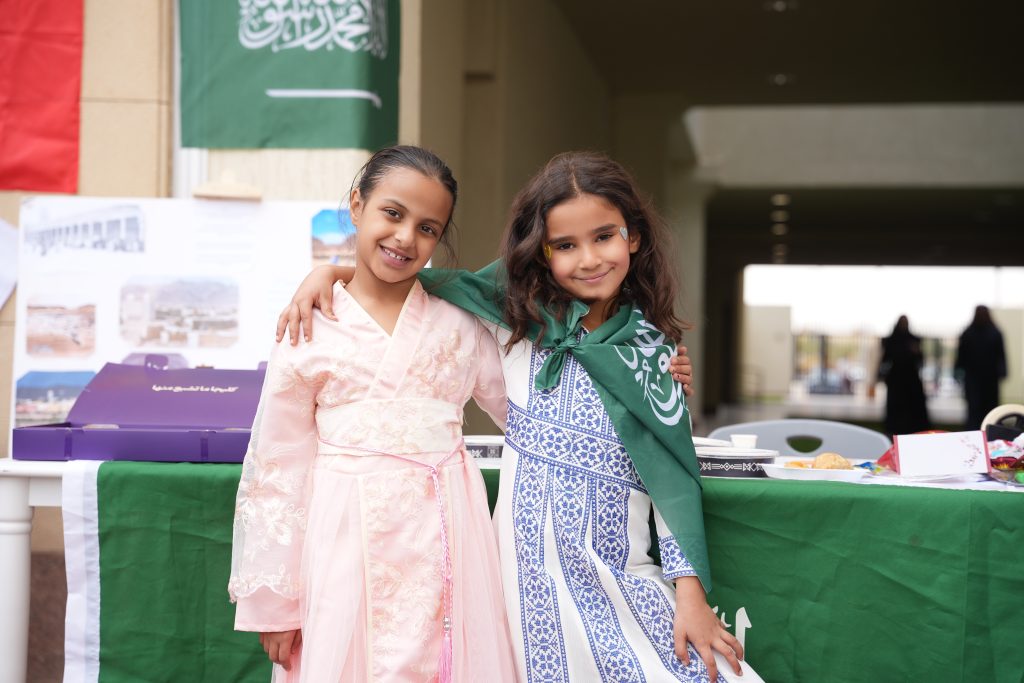
At the same time, we also integrate the rich values and traditions of Saudi culture throughout our programme, so that children remain deeply rooted in their heritage even as they become global citizens. It is truly the best of both worlds: a global outlook grounded in local culture and values.
Future-ready Learners
Our global environment and bilingual, inquiry-based education prepare students for success in an interconnected world. By nurturing language skills, critical thinking, and cultural fluency from day one, we raise confident, adaptable young people ready for the challenges of tomorrow.
Join us in this journey of raising the next generation of global learners. Book a tour today and experience the EtonHouse Riyadh difference firsthand.